
Hypervigilance for Caregivers Involves Constantly Scanning Your Surroundings for Impending Disaster – Always Looking for Problems – Always Expecting Problems – and Keeping the Body/Mind in a Continual State of Emergency Alert.
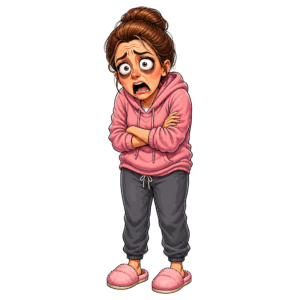
Hypervigilance is detrimental to your physical and mental health, so let’s fix it!
I call this state of alertness (almost as intense as if you were in a war zone) “using your antennae to scope out the environment, searching for trauma and trouble.” You’re constantly screening the environment, every person, and every noise to determine if a traumatic event is about to occur and you’ll have to respond. This keeps you in the Fight, Flight, or Flee emergency state, which is so hazardous to your mental and physical health.
Part of the solution is to retract (withdraw) your antennae so that you are not constantly searching outwardly into people or spaces looking for trouble.
Instead, you can turn your attention inward and recognize that, for the moment, you are SAFE. Below are FOUR EXERCISES TO HELP YOU.
First, the Table of Contents (TOC) for this article – then, the article!
Click on the little square in the upper right corner of the Table of Contents (TOC) to open or close it. When it is open, you can click on a link to go to a specific technique or topic. Or, just scroll beyond the TOC to see everything we’re sharing today!
Click to Open the Caregiver Hypervigilance - Table of Contents
Toggle1. The Hypervigilance “Retract the Antennae” Exercise
As a caregiver, you can do this by and for yourself. However, if you are a coach, counselor, family member, friend, or other helper for one or more caregivers, here’s how to guide them through techniques that can help them stress less.
Take a moment. Preferably, do this in a quiet, undisturbed location where the caregiver can sit still for a bit, but it can be done even in the midst of chaos, if necessary. You also can do it for a group in a support session for caregivers. We’ll pretend we’re working with a group for this process right now.
The Technique
I want you to close your eyes for around 60–90 seconds.
Now, imagine that, throughout the day, you have dozens of invisible sensory filaments or threads of energy extending from your body and mind toward each person for whom you provide caregiving services.
They might also extend to your own family or friends, whom you feel as if you are neglecting when you perform your caregiver duties.
Those hypervigilant, antennae-like threads also reach toward the telephone, hospitals, medications, and appointments, as well as to the noises in another room. Always searching. Always on high alert.
All those threads connect to points in your mind and your gut, along with the constant, fearful question, “What is going to happen next?”
That creates a constant level of fear, and reinforces PTSD symptoms, as well as potentially creating health issues for YOU. Thus, it’s important to break the habitual emergency alert status as often and thoroughly as possible.
- So, Let’s Inhale a Slow Deep Breath through the nose and then hold it for a few seconds while you concentrate on those many slender threads of attention.
- Exhale: Notice how far outward your awareness has traveled from you to all those people, places, and concerns. Let the breath escape, reaching all those places and softening the threads so they can dissolve or return home to you now.
- Inhale Again, Slowly and Deeply, through the nose, and hold the breath for a few seconds while you imagine all those invisible threads gently retracting – softly coming back – carefully and harmlessly returning toward your body.
- Then Exhale Fully with a Sigh of Release and Relief as the threads disappear from beyond your body.
- While the strands come back home to enter the safety of your body, your attention begins to go to the gentle sensations you can feel now on your skin and then inside your body.
- Pause … and then Purposely take Another Slow, Deep Inhalation of Breath as you put your awareness on the feelings and sensations inside the boundary of your skin.
- Let your consciousness sense what is present in your limbs, your chest, your abdomen, your head….wherever your attention leads you.
- Stay aware as your attention focuses intently and stays within your body mind.
- Then place one hand over the sternum at the heart and heart chakra. Place the other hand over the lower abdomen and think or say aloud:
“My energy belongs within me. I can love others without pouring myself into them.”
“If something requires my attention, I will respond when it arrives and not before.
I release fear of things that may not even happen or might happen later.
I am safe.
I am fully grounded in the present.
I conserve my energy for when it is actually needed.”
This isn’t a claim that literal energetic filaments exist. It is an imagery practice for deliberately relocating attention from external threat-scanning to internal bodily awareness, using body-focused attention and slow breathing, both of which create legitimate physiological grounding.
If you also have an actual grounding mat on which to place your feet during this session, or if you can be barefoot on the earth outdoors, that will enhance the process of reclaiming your energy.
Do it as often as feels helpful and each time after an incident, or an appointment, or some other trigger. It is especially important after leaving a hospitalized or upset patient and then getting into the car. Do it BEFORE driving, and again before going to sleep.
2. The Hypervigilance “Inner Sphere” Technique
You might expect that, as a holistic healer, I would suggest the common practice of having caregivers imagine a protective shield around themselves. I’ll not do that today.
Why?
The conventional metaphysical visualization of putting a shield around one’s self or using any kind of shield still tells the subconscious:
“There is danger outside me from which I must defend myself.”
For someone already scanning constantly for danger, that may inadvertently reinforce the very orientation that we are trying to diminish.
The Technique
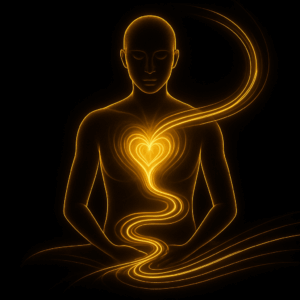
Instead, have the caregiver(s) visualize a sphere of quiet light inside of his or her body. Then, take the following steps.
Begin with imagining a small golden-white light behind the sternum in the heart and heart chakra area.
With each slowly inhaled breath through the nose, imagine it fills the caregiver(s’)
chest → then abdomen → and pelvis → arms → legs → and head
one area at a time.
Eventually the entire physical body is illuminated from within. Say aloud, “the healing light fills my whole body and stops at the skin.”
Tell the caregiver:
Nothing needs to be pushed away.
Nothing needs to be blocked.
Nothing needs to be monitored.
The last instruction is simply for the caregiver to say:
“I honor and inhabit my own body completely.”

And then:
“I am here. (The name of the patient) is there. (The name of another sources of stress) is over there. (The situation) is separate from me.
Love connects us. AND SO …. My responsibilities do not include merging our energies. Merging brings more harm than benefit. Knowing that, …
I keep a healthy energy field within myself, so that I can both serve and survive in good mental and physical health.”
3. Hypervigilance Can Be Calmed Using
The “Box” Breath / “Square Breath” Technique
Box breathing (also known as square breathing or four-square breathing) is a simple, highly structured technique designed to reset the nervous system, sharpen focus, and reduce stress.
Roots and Evolution of “Equal Breathing” Breathwork Practices
-
Yogic Origins: The technique originates in ancient Indian Pranayama practice under the term Sama Vritti (which translates to “equal breathing” or “equal movement”). In traditional yoga, equal duration is given to inhalation (puraka), retention after inhalation (antara kumbhaka), exhalation (rechaka), and retention after exhalation (bahya kumbhaka).
-
Modern Tactical Adoption: U.S. Navy SEALs and other special operations personnel popularized the practice under the name Box Breathing. It is used during tactical training and combat situations to down-regulate the sympathetic nervous system (“fight or flight”), lower heart rates, prevent panic, and maintain steady composure under intense pressure.
Breathwork: The 4-Step Cycle (4-4-4-4 Count)

Each step or “side of the box” takes an equal count of 4 seconds:
1.Inhale:4 Seconds.
Slowly breathe in deeply through your nose for a count of 4, expanding your abdomen rather than raising your shoulders.
2.Hold:4 Seconds.
Gently retain the air in your lungs for a count of 4. Avoid clamping your throat tightly; keep your chest, head, and neck relaxed.
3.Exhale:4 Seconds.
Smoothly release all the air through your mouth or nose over a count of 4, feeling your stomach pull inward.
4.Hold:4 Seconds.
Hold your lungs empty for a count of 4 before starting the next breath.
Physiological Benefits for Combatting Hypervigilance Using the Block/Square Breathwork Techniques
-
Nervous System Shift: The deliberate 1:1:1:1 ratio stimulates the vagus nerve, shifting the body out of stress mode and engaging the parasympathetic (“rest and digest”) response.
-
Mental Clarity: Holding empty lungs (bahya kumbhaka) forces complete mental presence and clears sensory overload.
-
CO₂ Regulation: The controlled retention helps normalize carbon dioxide levels in the bloodstream, stabilizing blood pressure and reducing physical tremors caused by adrenaline.
Practicing this cycle 4 to 5 times (roughly 1 to 2 minutes) is usually enough to produce an immediate calm and reset focus before and after high-stakes tasks or emotional encounters.
NOTE: THIS BREATHWORK TOOL CAN BE USED BY ANYONE – AT ANY TIME – IN ANY CIRCUMSTANCE – WHERE STRESS REDUCTION IS NEEDED.
NO ONE HAS TO KNOW YOU’RE DOING IT.
KEEP PRACTICING AND USE IT FOR TIMES WHEN YOU FEEL EMOTIONALLY OVERWROUGHT OR STRESSED – OR JUST FOR GOOD HEALTH, GENERALLY.
4. The Hypervigilance “Off Duty for Five Minutes” Tool

I hear the timer! It’s time for my 5-minute break away from everything and everyone!
This one needs to become almost sacred for caregivers.
Several times each day, when everyone is medically safe, the Caregiver deliberately declares a five-minute interval in which she is responsible for nobody except him or herself.
- Put the phone away from you and don’t respond to notifications or rings if circumstances permit.
- Plant your feet firmly and evenly on the floor.
- Put your hands on your body rather than reaching toward anything.
- Do the “Box Breathing” technique.
During those five minutes, whenever the caregiver’s mind produces thoughts like:
“I wonder if …”
“I need to check on…”
“Did (the patient) remember to…”
DON’T finish the thought!
Remind yourself: “Not during these five minutes.”
Then return full attention to the sensation of breathing inside his or her own body.
This isn’t selfishness or merely a pleasant meditation. It is practice in turning off surveillance. The caregiver is teaching the nervous system that vigilance has an OFF switch.
Harvard’s caregiver guidance specifically recommends regular breath awareness, and caregiver research suggests even brief breathing practices can create a useful pause between an automatic stress reaction and the person’s response.
One Distinction for Caregivers Who are Hypervigilant
There are really two Caregivers operating at present:
Caregiver as the responder:
“There is a problem. I need to act.”
That part is extraordinarily useful, but then there is:
Caregiver as the “watchdog” sentinel:
“There might be a problem. I’d better keep looking for it.” That is one part that is overextending the exhausted the caregiver.
We don’t want to disable the caregiver.
We want to give the caregiver’s sentinel permission to practice self-preservation instead of acting as a watchdog 24/7/365.
And because a caregiver’s patient(s) genuinely have serious medical problems, never tell the caregiver’s nervous system, “There is nothing to worry about.” It knows perfectly well that isn’t true. Teach the caregiver (yourself, if applicable) something more believable:
“I don’t have to anticipate every crisis in order to respond competently when one occurs.”
That may be the central lesson.
Comments or Questions? I’d Be Happy to Help You!
Click here if you want to know “how far along” you are toward reaching “Caregiver Burnout.”
Click here to learn what things MUST be addressed.
Click here to learn more about self-preservation and letting go (during and after caregiving is over)

Talk to Nancy Wyatt in a Sip & Share Session!
If you send a question or comment, and the communication should be “just between us,” we can correspond through email GetWellStayWell@Outlook.com or MyGetWellGuru@gmail.com.
Just put “Private Get Well Inquiry” in the subject line.
You are welcome to request a Sip & Share Session on Zoom with me. The first one is FREE and lasts up to 30 minutes while we discuss your needs or project and my services. It is NOT a high-pressure sales pitch. It is an exploration of how we may help each other.
DISCLAIMER: I am not an expert, nor am I certified in any medical or scientific research capacity. I am simply sharing research that I’ve gathered from reliable sources, so that we all may learn and begin our own investigations.
Neither I nor this website makes any claims about prevention, diagnosis, treatment, or cure for physical, emotional, mental, or spiritual illnesses or symptoms. This content is for informational and educational purposes and does not provide individual medical advice. Contact your health provider about your situation.
Disclosure re AI Usage: In the interest of transparency, I, the author, Nancy Wyatt, note that I used AI assistance to acquire facts and research links. In addition, I created some of the artwork using AI and labeled it as such in the descriptions.
As the author, I maintain full responsibility for the final content. I affirm that this tool was used as a supplemental resource, not as a replacement for original thought or professional judgment. The content is a composite of words and phrases originating in my mind, along with input from AI.
Self-Care Is the New Health Care
Let’s Get Well, Stay Well, and Live Well!

Author: Nancy (Ayanna) Wyatt, Life Coach & Spiritual Counselor
Nancy (Ayanna) Wyatt, Author, CLC, MHT, TNLP + Reiki Master, Spiritual Counselor, Life Coach, Teacher, Trainer, Writing/Editing, Infographics, Web Content and Blogging Services. She helps people – from all walks of life – see their own beauty so they can heal and thrive, mentally, emotionally, physically, and spiritually.